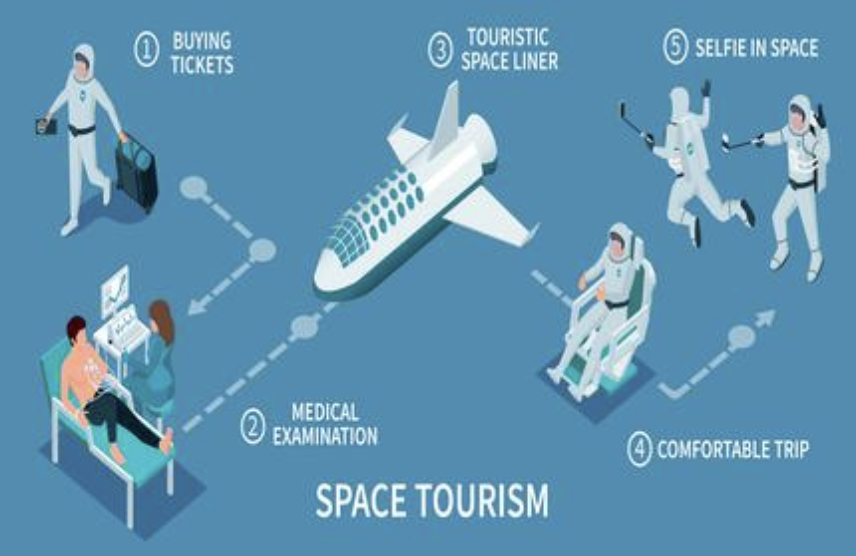
The universe, previously an exploration area for astronauts, is now opening its doors to a select group of affluent travelers. However, this journey through space continues to be a high-end experience, with its availability heavily reliant on advancements in technology rather than simple interest. This raises the ongoing question of when space travel will transition from being exclusive to commonplace.
Modular Capsules: Increasing Passenger Capacity
Modular space cabins, which have captured Musk's interest, are transforming spacecraft configuration. Divided into operational sections—such as life support, navigation, and habitation—they permit flexible construction, simplify manufacturing processes, and enable the creation of larger cabins that can transport more than just a handful of tourists.
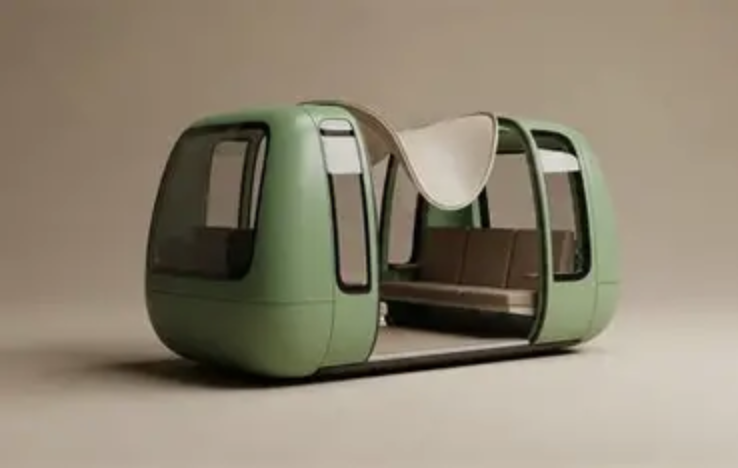
Every module is designed for quick replacement and improvements in orbit—living quarters can be increased with additional sleeping units for tourist groups, while research-oriented capsules can be exchanged for laboratory modules that are ready for experiments in zero gravity. This flexibility reduces the time needed for spacecraft modifications by more than 60%, and consistent designs for components lower manufacturing expenses, allowing expanded space travel to become available to a wider array of private customers, not limited to just ultra-wealthy individuals.
Ion Propulsion: Accelerating Travel Access
Variable specific impulse magnetoplasma engines are changing the landscape of travel efficiency. In contrast to traditional rockets, they provide continuous thrust using ionized plasma, significantly reducing the duration of interplanetary journeys. This technology enhances safety while simultaneously making frequent space travel more financially feasible.
Remarkably effective fuel utilization distinguishes these engines from chemical propulsion systems—they utilize a small portion of the propellant to produce comparable thrust, which prolongs mission durations and accommodates payloads for scientific tools or crewed habitats that would be excessively large for conventional rockets. Compact, modular configurations facilitate easy integration into both unmanned probes and forthcoming crewed spacecraft for interplanetary travel, establishing the foundation for routine, economical missions to the Moon, Mars, and further.
Space Manufacturing Synergy
Space tourism is not an isolated endeavor; it is interconnected with production in orbit. Utilizing microgravity for 3D printing and conducting pharmaceutical studies on crafts like Lihong-1 generates income streams that extend beyond tourism, subsidizing the costs of trips and lowering ticket prices as the space economy develops.
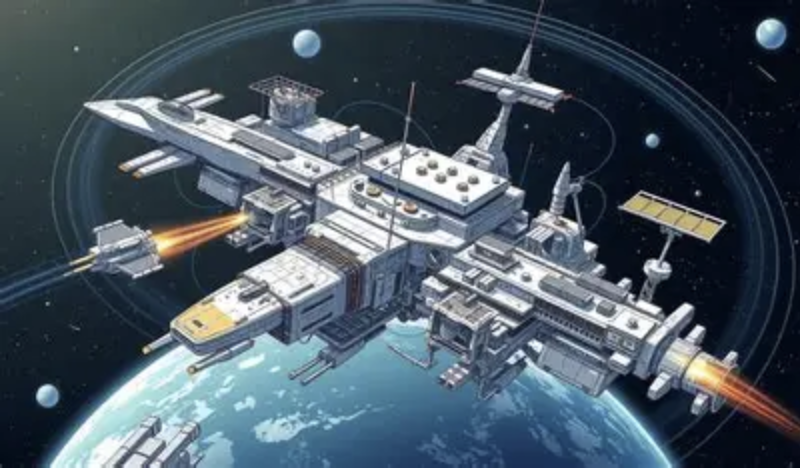
This collaboration across various sectors also fosters a circular ecosystem: 3D-printed structural elements produced in orbital manufacturing centers can be directly utilized for the upkeep of tourist spacecraft, whereas excess laboratory space from pharmaceutical and semiconductor initiatives is transformed into interactive science experience areas for paying guests. This type of integration enhances overall operational effectiveness and draws in varied investments, hastening the transition from a specialized, expensive space tourism framework to a more scalable and accessible industry for a broader audience.
Precision Landing: Improving Dependability
Lihong-1's impressive accuracy in landing within centimeters, demonstrated by its 100-kilometer drop precision, mitigates recovery risks. Such dependability is essential for gaining public trust, as general tourism requires safety standards that are as reliable as those in conventional travel.
The Path to Mainstream: A Measured Progression
Widespread space travel will not become a reality instantly. Its progress depends on the evolution of reusable technology, the expansion of modular structures, and the establishment of a thriving space ecosystem. Currently, only the fortunate few are exploring this frontier, yet every advancement brings us nearer to a time when the universe will be accessible to more than just the privileged.
