When we discuss advancements in technology, quantum computing stands out as a fundamental transformation rather than merely an enhancement; it fundamentally alters the traditional concepts of computing. For innovative thinkers and sectors, its possibilities extend far past quicker processors; it holds the key to addressing challenges that were previously considered insurmountable. Let us explore how quantum technology is set to redefine our reality.

Traditional computers find it challenging to simulate the interactions between molecules, which are essential for creating new pharmaceuticals. In contrast, quantum systems can directly model quantum mechanics, enabling researchers to construct intricate protein models and forecast how potential medications interact with them in mere days rather than over several years. This advancement means that bespoke cancer therapies catered to individual genetic profiles or treatments for neurodegenerative conditions like Alzheimer’s could transition from research environments to practical application at an astonishingly accelerated pace.
Supply Chain: Enhancing Complex Optimization
International supply chains entail countless variables—such as delivery paths, stock levels, and variations in demand—that classical computers cannot optimize effectively. Quantum algorithms can address these "combinatorial optimization" challenges effortlessly, reducing logistics expenses by 30% or greater. Picture retailers anticipating local demand with precision down to specific neighborhoods, or producers minimizing waste by synchronizing production precisely with current requirements.

Cybersecurity: Redefining Protective Measures
Modern encryption techniques depend on the lengthy process of factoring large numbers—an endeavor that classical computers take ages to resolve. Quantum computers will not only bypass this limitation but will also develop unfathomable "quantum key distribution" (QKD). QKD employs quantum particles for the transfer of encryption keys; any effort to intercept these keys disrupts the particles, notifying users. Consequently, financial transactions, health records, and government information will soon be safeguarded by the laws of physics rather than mere coding.
Climate Modeling: Forecasting a Shifting Planet
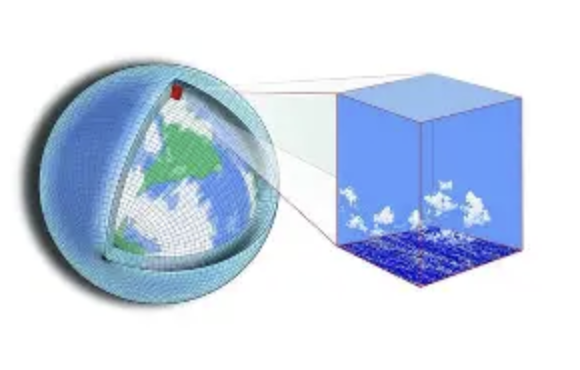
Weather systems exhibit chaos—too intricate for classical approaches to represent accurately. Quantum computers can examine interconnected variables such as ocean currents, atmospheric conditions, and glacial melting all at once, generating hyper-local climate forecasts. This capability allows municipalities to engineer flood barriers for specific localities, farmers to adjust their crops according to subtle changes in microclimates, and countries to enhance renewable energy networks based on exact weather predictions.
Artificial Intelligence: Unlocking Genuine Learning
Traditional artificial intelligence learns from available data; however, quantum machine learning (QML) recognizes patterns that evade human observers and classical models. QML algorithms can analyze unstructured data—like satellite images or consumer behavior—at quantum speeds, allowing AI to create new materials, diagnose ailments from subtle indicators, or devise customized educational plans that respond to the individual learning styles of students.
Quantum computing revolutionizes the financial landscape by providing simulations of market activity with unmatched precision. Hedge funds will apply quantum models to anticipate changes in stock prices influenced by global events, while banks will evaluate credit risk by examining a multitude of unconventional data points. Even insurance providers will determine premiums based on current, detailed risk elements, enhancing the stability and personalization of financial systems.